Introduction to Commercial Grade Waterproof Exterior Paint Solutions for High-Rise Buildings
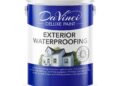
High-rise buildings are exposed to harsh weather conditions and environmental elements, making it crucial to use commercial-grade waterproof exterior paint to protect the structure. This type of paint provides a durable barrier against moisture, preventing water infiltration and potential damage to the building.
Challenges Faced by High-Rise Buildings in Terms of Exterior Paint Durability
High-rise buildings face unique challenges when it comes to exterior paint durability. The constant exposure to UV rays, rain, snow, and pollution can cause conventional paint to deteriorate quickly, leading to costly repairs and maintenance.
Benefits of Investing in High-Quality Waterproof Paint Solutions for High-Rise Buildings
- Enhanced Protection: Commercial-grade waterproof paint offers superior protection against water damage, mold, and mildew, extending the lifespan of the building.
- Long-Term Cost Savings: Investing in high-quality waterproof paint can reduce maintenance costs and the need for frequent repainting, saving money in the long run.
- Aesthetic Appeal: Waterproof exterior paint can enhance the appearance of high-rise buildings, adding to their curb appeal and overall value.
- Increased Property Value: By investing in durable waterproof paint solutions, high-rise building owners can increase the property's value and attract potential buyers or tenants.
Types of Commercial Grade Waterproof Exterior Paint
When it comes to waterproof exterior paint solutions for high-rise buildings, there are several types available, each with its own unique features and applications.
Elastomeric Paint
Elastomeric paint is a popular choice for high-rise buildings due to its flexibility and ability to stretch without cracking. This type of paint can withstand extreme weather conditions, making it highly durable and long-lasting. Elastomeric paint is typically applied using a thick nap roller or a sprayer to ensure proper coverage and adhesion to the building's surface.
Silicone-Based Paint
Silicone-based paint is known for its excellent water resistance and durability. It forms a protective barrier on the exterior surface of the building, preventing water penetration and ensuring long-term protection. Silicone-based paint is applied using a high-quality brush or sprayer to achieve a smooth and even finish.
Acrylic Paint
Acrylic paint is another common choice for waterproofing high-rise buildings. It offers good adhesion to various surfaces, excellent weather resistance, and UV protection. Acrylic paint is easy to apply using a brush, roller, or sprayer, making it a versatile option for exterior painting projects.
Polyurethane Paint
Polyurethane paint is highly durable and offers superior protection against water damage and harsh weather conditions. It forms a strong, seamless barrier on the building's surface, providing long-lasting waterproofing. Polyurethane paint is usually applied using a spray gun or brush, depending on the specific requirements of the project.
Factors to Consider When Choosing Waterproof Paint for High-Rise Buildings
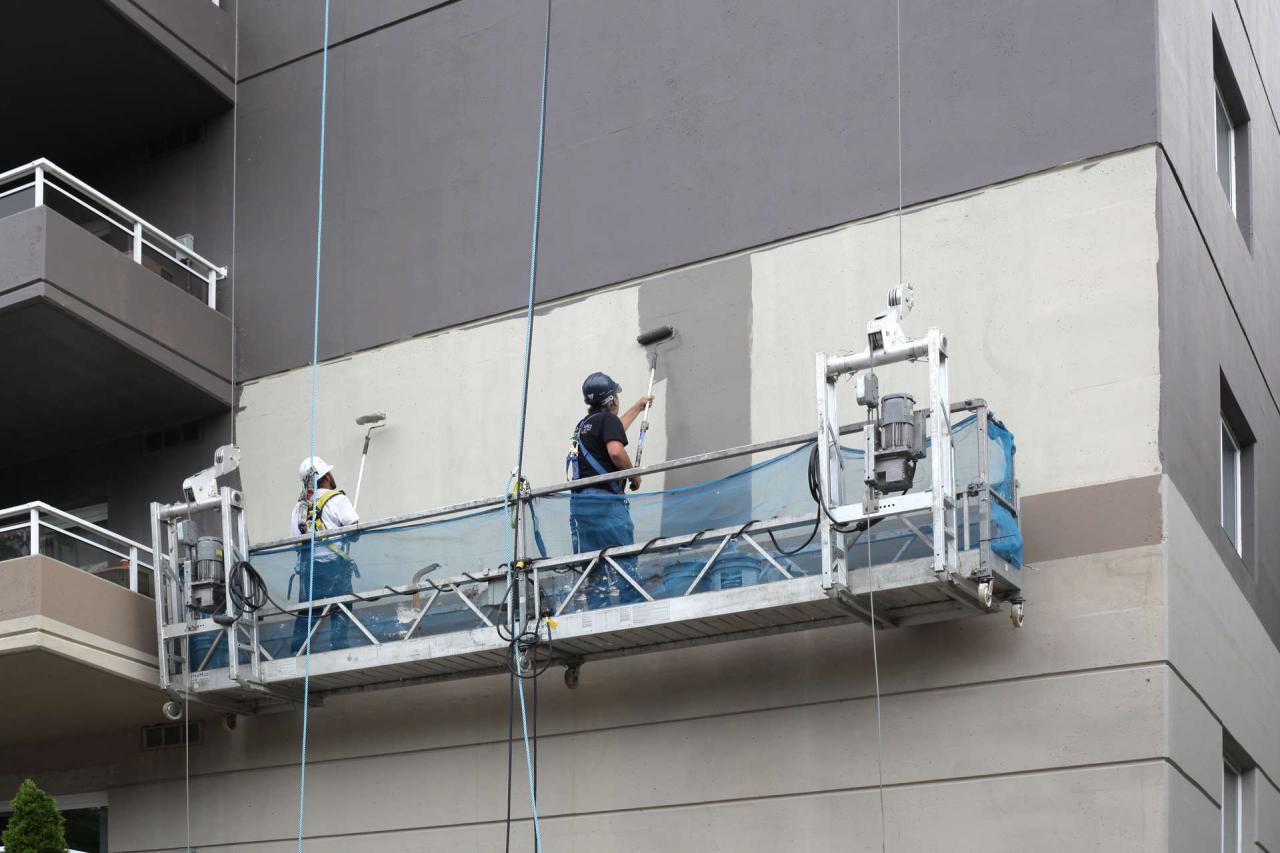
When selecting waterproof paint for high-rise buildings, several important factors need to be taken into consideration to ensure the longevity and effectiveness of the paint application. These factors include the climate of the region, the type of building material, and the location of the high-rise building
Role of UV Protection, Mold Resistance, and Color Retention
- UV Protection: High-rise buildings are exposed to harsh sunlight, which can cause paint to fade and deteriorate over time. Therefore, choosing a waterproof paint with UV protection is crucial to maintain the appearance and integrity of the building's exterior.
- Mold Resistance: In humid climates, mold and mildew can quickly grow on exterior surfaces. Waterproof paint with mold resistance properties helps prevent the growth of mold, ensuring a clean and healthy environment for occupants.
- Color Retention: Over time, exposure to the elements can cause paint colors to fade. Opting for waterproof paint with excellent color retention properties ensures that the building's exterior maintains its vibrant appearance for years to come.
Comparison of Various Brands or Products
| Brand/Product | UV Protection | Mold Resistance | Color Retention |
|---|---|---|---|
| Brand A | Yes | No | Excellent |
| Brand B | Yes | Yes | Good |
| Brand C | No | Yes | Excellent |
Application and Maintenance of Commercial Grade Waterproof Paint
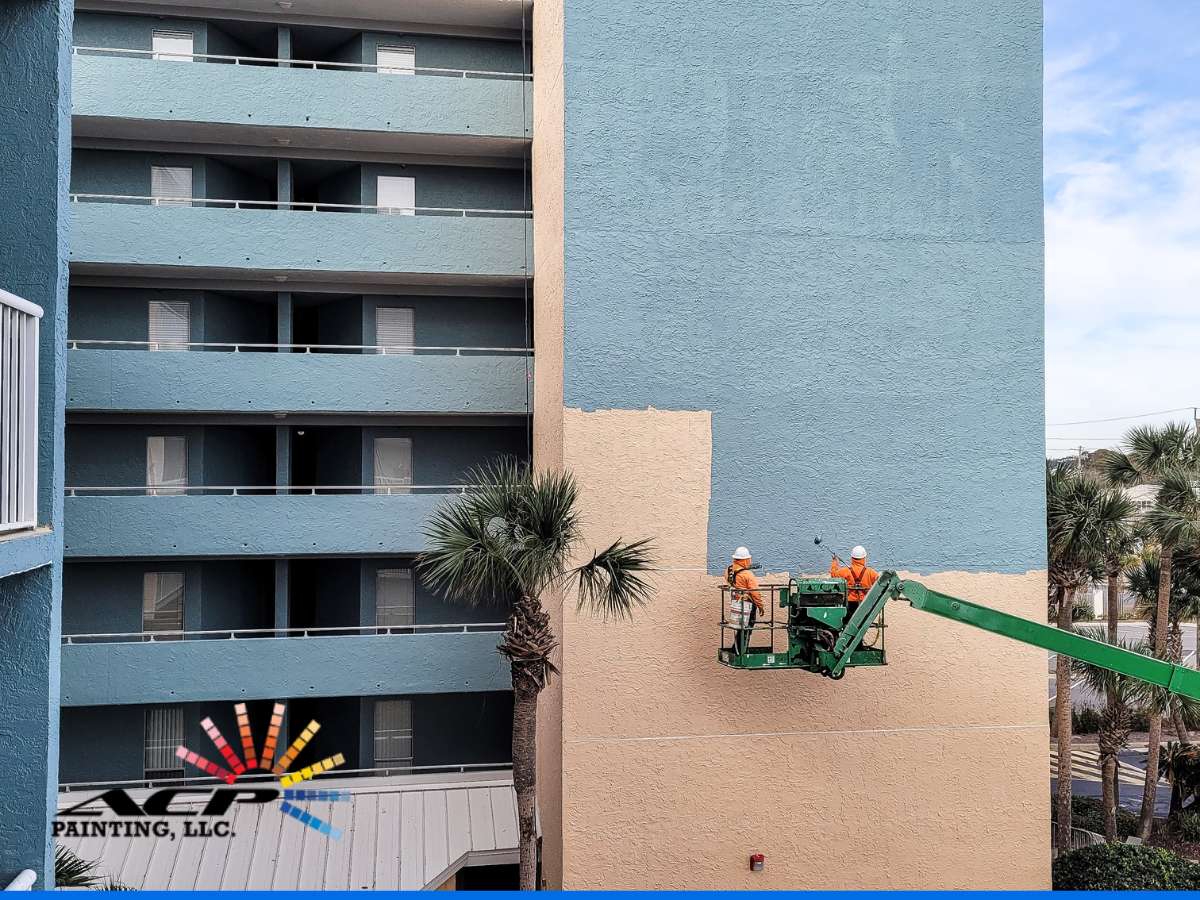
When it comes to applying commercial grade waterproof paint on high-rise building exteriors, it is essential to follow a step-by-step process to ensure a smooth and even application for long-lasting results. Additionally, proper maintenance practices are crucial to extend the lifespan of the waterproof paint and protect the building structure.
Application Process
- Clean the surface thoroughly to remove any dirt, debris, or old paint that may affect adhesion.
- Repair any cracks or imperfections in the surface to create a smooth canvas for the waterproof paint.
- Prime the surface with a suitable primer to enhance adhesion and ensure proper coverage of the waterproof paint.
- Apply the commercial grade waterproof paint using a high-quality brush, roller, or sprayer, following the manufacturer's instructions for the best results.
- Allow the paint to dry completely between coats to achieve optimal waterproofing performance.
Tips for Even Application
- Ensure proper ventilation during the application process to allow the paint to dry effectively.
- Avoid applying the paint in direct sunlight or extreme temperatures to prevent blistering or uneven drying.
- Use long, even strokes when applying the paint to maintain a consistent finish across the entire surface.
- Apply multiple thin coats of paint rather than one thick coat to achieve better coverage and durability.
Maintenance Practices
- Regularly inspect the painted surfaces for any signs of wear, damage, or peeling, and address any issues promptly.
- Clean the painted surfaces periodically to remove dirt, grime, and other contaminants that can degrade the waterproofing properties of the paint.
- Consider applying a fresh coat of waterproof paint every few years to maintain the protective barrier and extend the lifespan of the building structure.
FAQ
How does waterproof paint benefit high-rise buildings?
Waterproof paint prevents water damage, mold growth, and enhances the longevity of the building's exterior.
What factors should be considered when selecting waterproof paint for high-rise buildings?
Factors such as climate, building material, UV protection, and color retention play a crucial role in choosing the right waterproof paint.
Are there specific application methods for different types of waterproof paint?
Yes, each type of waterproof paint may require a specific application technique to ensure optimal results and longevity.